Talking point: Are London's homes ready for a hotter future?
01.09.26

Tom Dollard
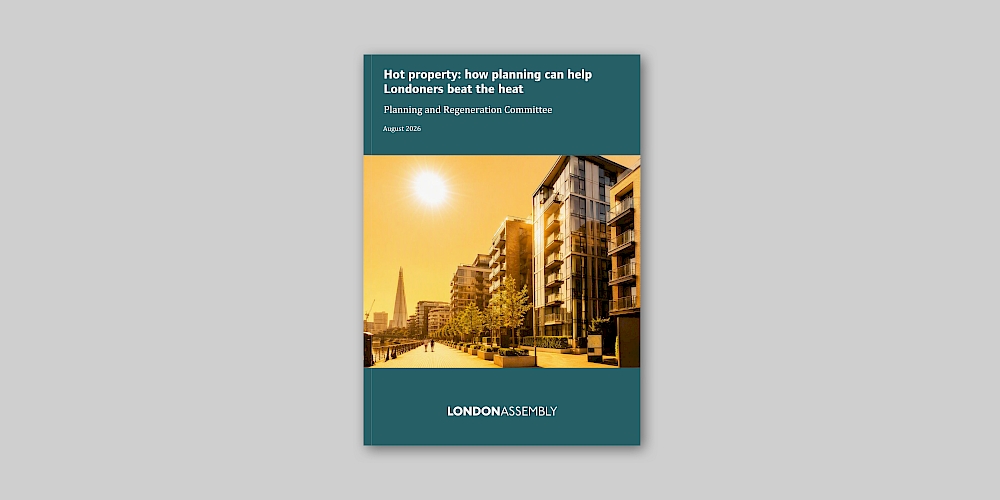
Last month I contributed to the London Assembly report Hot property: how planning can help Londoners beat the heat. It makes for uncomfortable reading. As temperatures continue to rise, overheating is no longer a future risk but a growing reality, with many homes struggling to provide refuge during periods of extreme heat.
In my contribution, I called on the GLA to establish a London-wide overheating monitoring programme, bringing together temperature data and post-occupancy evaluation (POE) findings from GLA-funded developments, local authorities and housing associations. This evidence could help assess the effectiveness of Approved Document O and inform future policy and regulation. I've written before about the importance of POE and the need to stop guessing how our buildings perform. As our climate changes, understanding how homes function in practice has never been more important.
For designers, planners and housing providers, overheating presents a significant challenge. For decades, policy and practice have focused on keeping homes warm and reducing energy demand. These remain vital objectives, but we must now ensure homes are equally capable of staying cool.
At PTE, this is an issue we encounter across many housing projects. Good design remains the first line of defence. Building orientation, external shading, natural ventilation, thermal mass, landscape design and green infrastructure can all reduce overheating risk before resorting to energy-intensive cooling systems. Passivhaus principles also have an important role to play, helping homes stay warm in winter and cool in summer.
The report reinforces many of the principles already embedded within the London Plan's cooling hierarchy, while acknowledging that passive measures alone may not always be enough in the decades ahead. The challenge is to balance comfort, affordability, energy use and long-term climate resilience.
Overheating can no longer be treated as a technical compliance issue. It must be considered from the earliest design stages, where decisions about massing, form, aspect, building height, glazing and ventilation have the greatest impact. Get these decisions right and the benefits extend well beyond thermal comfort, improving health, wellbeing and quality of life for residents.
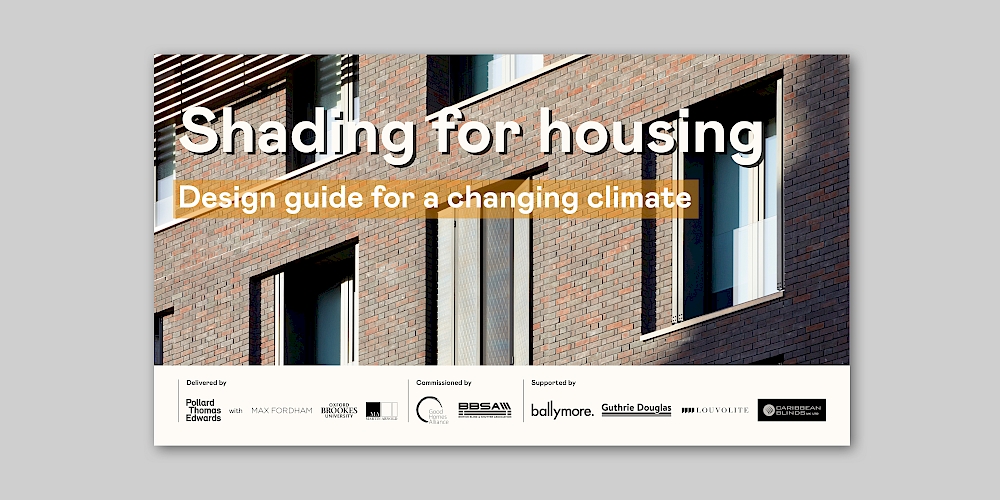
This is why we worked with the Good Homes Alliance to produce the Shading Guide for Housing and why we are supporting the update of the GHA Overheating Tool later this year.
The question for the housing sector is no longer whether we need to design for hotter summers, but whether we are moving quickly enough to do so.